
Freya Oracle
Readings
The Heart · The Lady · The Seeress · The Field
Every reading for the Freya Oracle in full: what each spread is for, how to lay it out, what each position means, how the cards speak to one another, and a worked example using the cards of this deck.
A reading should create recognition, not dependency.
Before Any Reading
Freya is approached simply. Set down your stones. Light the flame. If you wish, offer something real — mead, milk with honey, bread, amber, a flower at its fullest. Say her name aloud, plainly. She does not need to be persuaded to come. She needs to be called.
Sit a moment. Let the breath settle on its own. See her on the road at dusk, unhurried, her two great cats before her, the gold at her throat catching the last light. Let her come close enough that you feel the warmth of it.
Then hold the deck and say your question once, aloud or silently. Keep it open. Instead of "Will he come back?" ask "What do I need to understand about this love now?" Instead of "Will I get the job?" ask "What do I need to see about this work?"
Shuffle in whatever way feels natural. Stop when you feel ready. Lay the cards face down in the shape of the spread, then turn them over one at a time, in order.
Before you open the guidebook, look. Notice whether Freya herself is in the card, or only her things. Notice what is held or laid down, open or guarded, rising or resting. Position matters in this deck because position is often the verb.
Look first. Read the meaning line second. Open the guidebook last.
The Grammar of the Deck
Every card in the Freya Oracle is one of three kinds, and you can see which at a glance, before you know anything about the card.
She Appears
Freya herself is in the card — crowned, cloaked, with her cats, her falcon, her heart in her hands. These cards show her teaching directly: something she is, or something she is doing that she invites you to do. Read them as her voice.
The twenty-six cards where she appears: 1 The Fierce Heart · 2 Desire · 3 Brisingamen · 4 Golden Tears · 5 The Longing · 6 The Search · 7 Pleasure · 8 Devotion · 9 The Open Heart · 10 Love Without Possession · 11 Receive · 14 Sovereign · 19 The Body Knows · 20 Your Own Name · 21 Untamed · 23 Seiðr · 24 The Knowing · 25 The Falcon Cloak · 27 The Hidden Name · 29 The Sacred Ally · 30 Remember · 31 The Spell · 32 The Veil · 33 The Turning · 36 Stand Your Ground · 44 The Heart Remains
Stand Your Ground is the only card where she is seen from behind. It is the one card in the deck that asks you to step into her place.
The Sign
Freya is absent, and what remains is a sign: a pair of hands, a scale, a jug, a labyrinth, a runestone, a signpost, a shield, a sword, a stone heart, armour laid down, a path. These cards show a condition, a choice or a threshold. Describe them and let them stand.
The fifteen signs: 12 The Refusal · 13 The Boundary · 15 The Choice Is Yours · 16 What You Will Not Trade · 17 The Price · 18 Enough · 22 Return to Yourself · 34 Fólkvangr · 35 Choose Your Battle · 37 The Shield · 38 The Sword · 39 The Wound · 40 After the Battle · 41 Lay Down the Armour · 43 The Victory
The Creature
A creature alone: a great bird above the storm, her golden boar, two swans. These cards show an ally or a power that is already with you — something that carries, rises or loves on your behalf.
The three creatures: 26 Above the Storm · 28 Hildisvíni · 42 Love After War
Why This Matters in a Spread
Most spreads move from what is happening, to what is asked, to what is true. A sign usually shows what is happening. When Freya appears, she usually shows what is asked or what is true. A creature usually shows the help you have.
Freya appears where you expected a condition: the situation is not only a problem. She is already present in it, teaching.
A sign where you expected an action: the move is to notice, not to do. Look at how the sign sits: the sword upright means decide; the armour laid down means rest.
A creature in any position: you are not alone in this. Name what is carrying you.
A Field card (34–44) where you expected what is true: what remains may be the aftermath of a battle, not its outcome. Read it as what you are carrying now.
What Do I Need to See?
One Card
One question, one card, one reflection is a complete reading.
When to Use It
Every day, or whenever a single question is pressing. This is the reading the deck is built for. It is also the right reading when you are tired, grieving or overwhelmed; one card asks very little of you.
How to Lay It Out
Ask your question. Draw one card. Place it in front of the flame.
How to Read It
- Describe the picture to yourself in plain words, without interpreting it.
- Read the meaning line aloud.
- Read Freya Asks, and sit with the question before reading anything else.
- Open the guidebook entry. Take what helps.
- Return to your question and say, in one sentence, what you now see.
If the card is unclear, ask one more question — "What part of this card am I not understanding?" — and draw a single clarifier. Do not keep drawing until you get an answer you like.
A Worked Example
Question: What do I need to see about the work I keep saying yes to?
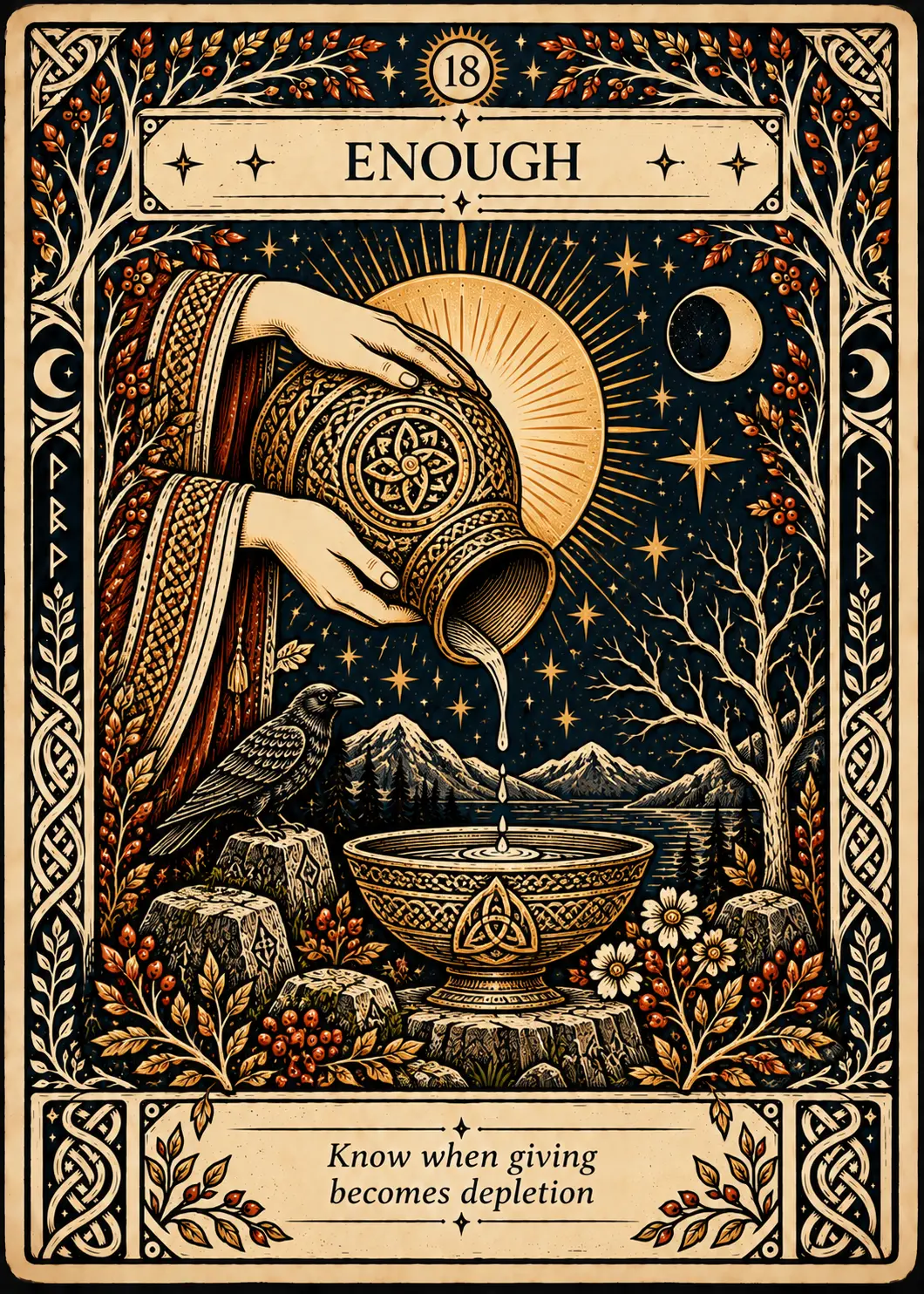
Two hands pour from a jug into a bowl; the last drop is falling, and the trees behind are bare. The card does not say stop giving. It says the jug is nearly empty, and it is winter. The reading in one sentence: I have given enough; it is time to refill before I pour again.
Where Am I?
Three Cards
1 What is happening? · 2 What am I not seeing? · 3 What is being asked of me?
When to Use It
When you need to understand a situation rather than decide it. This is the most useful spread for most questions, and the best spread for reading for another person.
How to Lay It Out
Three cards in a row, left to right.
The Positions
1 · What is happening? — The situation as it stands.
2 · What am I not seeing? — What is hidden, avoided or taken for granted. This is often the most important card on the table.
3 · What is being asked of me? — The one move available now. Not a prediction; an invitation.
How to Read It
Describe all three pictures before interpreting any of them. Then read position 1, then position 3, and leave position 2 until last. Position 2 is the hinge: once you see what was hidden, the ask in position 3 usually makes sense.
A Worked Example
Question: Where am I in my marriage?
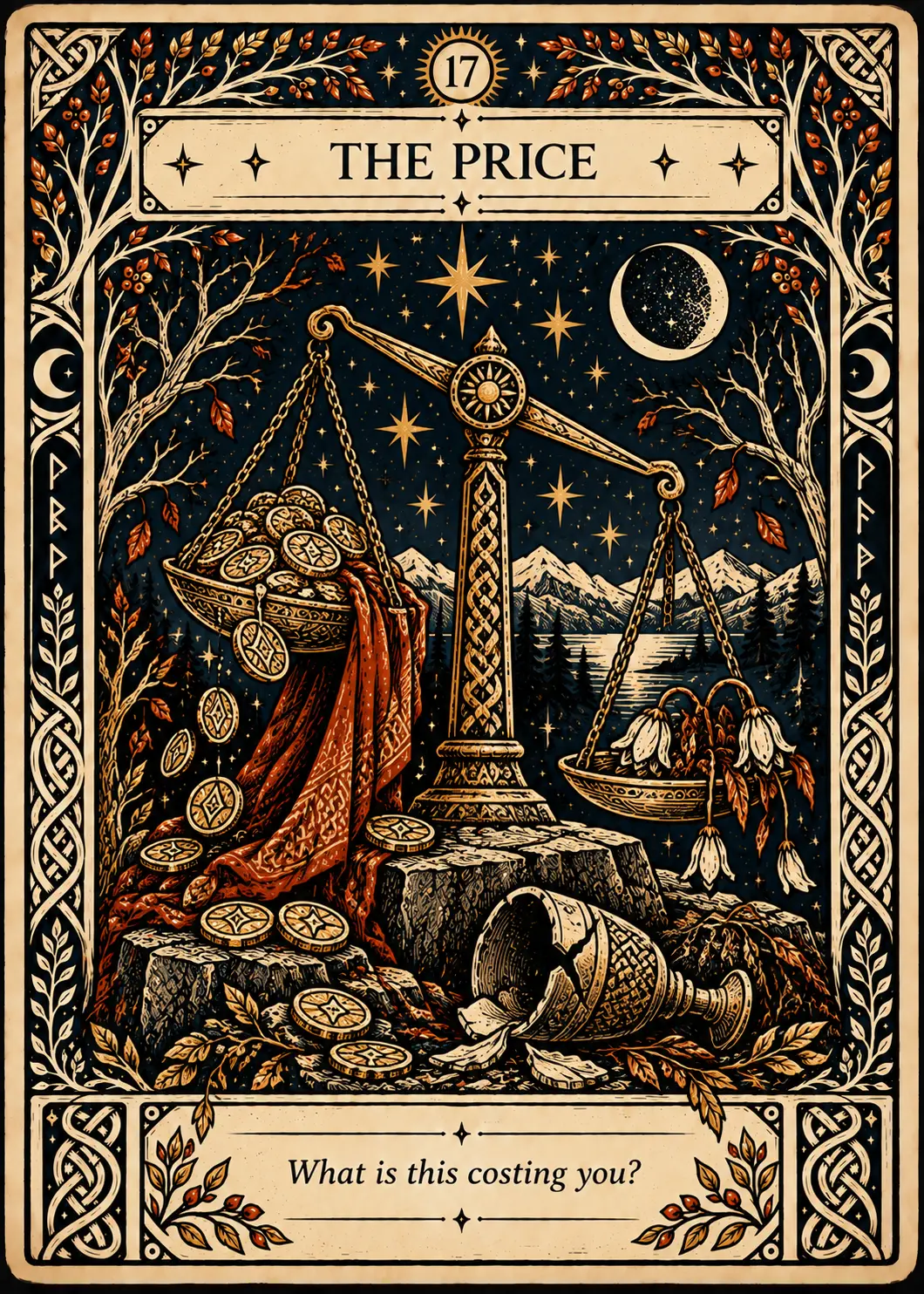
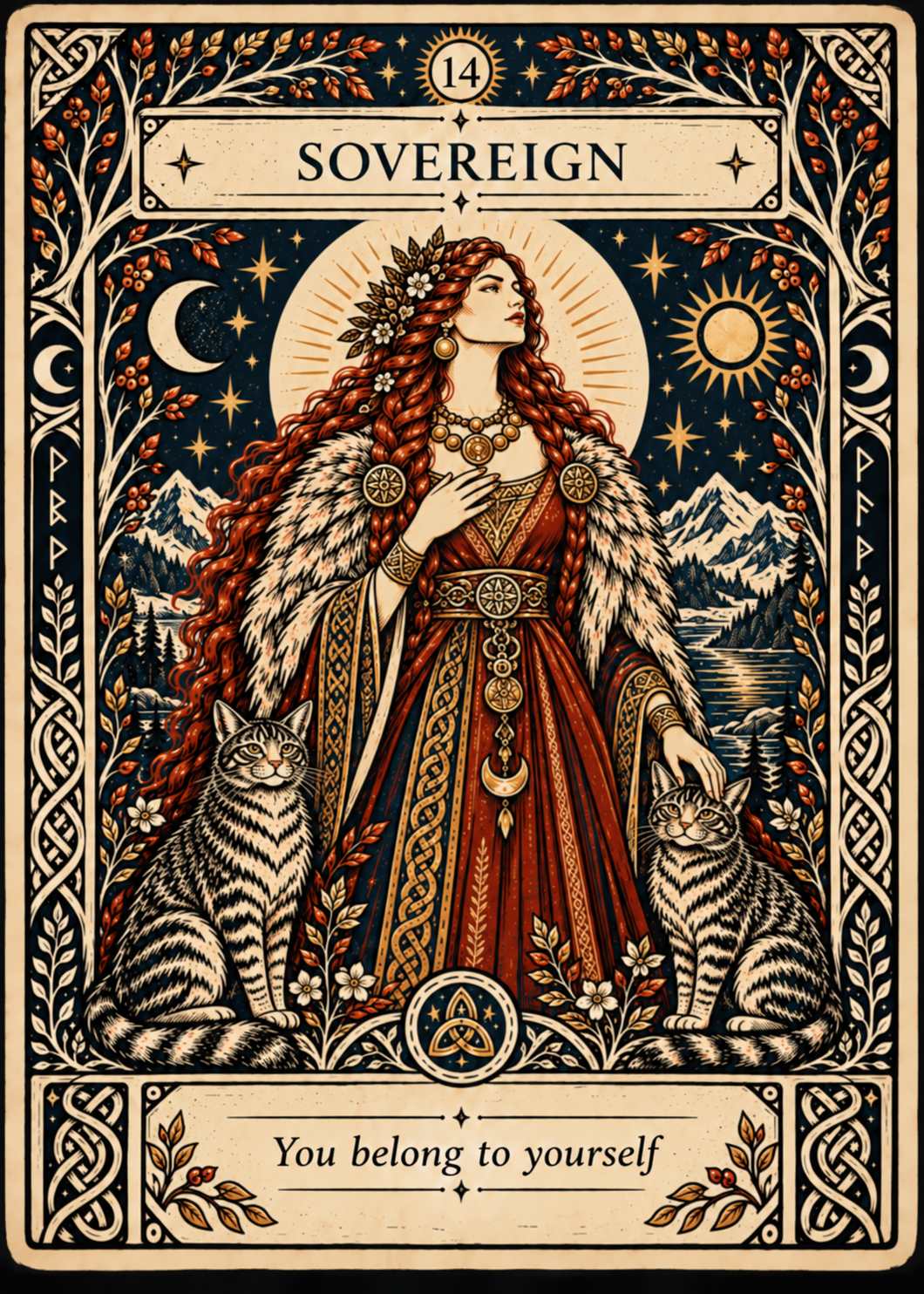
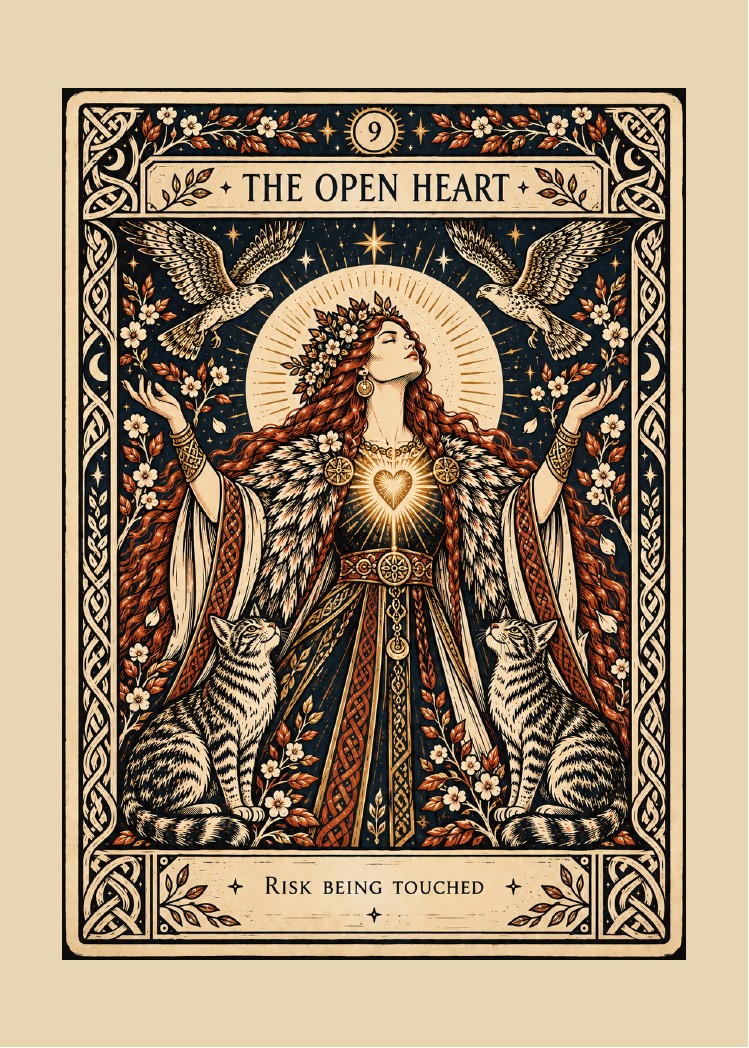
A scale tips under spilled gold, a red cloak crumpled on the rocks, a cup broken: something in the marriage is costing more than she has counted. In the hidden position Freya stands tall with her hand on her heart: what is not being seen is that this woman belongs to herself, and has been living as though she did not. And the ask is the open heart, arms raised. The reading does not say leave or stay. It says: count the cost honestly, remember that you belong to yourself, and from there, risk being truly touched again — by your partner, or by your own life.
Freya's Hall
Five Cards
1 What has been burning? · 2 What do I bring to the altar? · 3 What am I wanting? · 4 What is mine to claim? · 5 Where is my seat?
When to Use It
This is Freya's own spread. Use it at the turning of a season, on a Friday, at the winter nights, at a birthday, or whenever you want to stand back and see your life whole.
How to Lay It Out
Lay the five cards as the floor plan of a hall. Card 1 at the door, nearest to you. Cards 2 and 3 on either side, like the pillars. Card 4 beyond them, at the hearth. Card 5 at the far end, at the high table.
The Positions
1 · What has been burning? — The fire you have been through, or are in now. What has been tested or lost.
2 · What do I bring to the altar? — Your offering: what you have to give, what you have kept faith with.
3 · What am I wanting? — Your desire, said plainly. Often the card here names something you have not allowed yourself to want.
4 · What is mine to claim? — What is yours by right, and what you are being asked to take up.
5 · Where is my seat? — Where you belong. Where you are received.
How to Read It
Walk the hall from the door to the high table. Read each card in turn, then look at the whole room. If position 5 is a card where Freya appears, she is telling you that you already belong, whatever position 1 shows.
A Worked Example
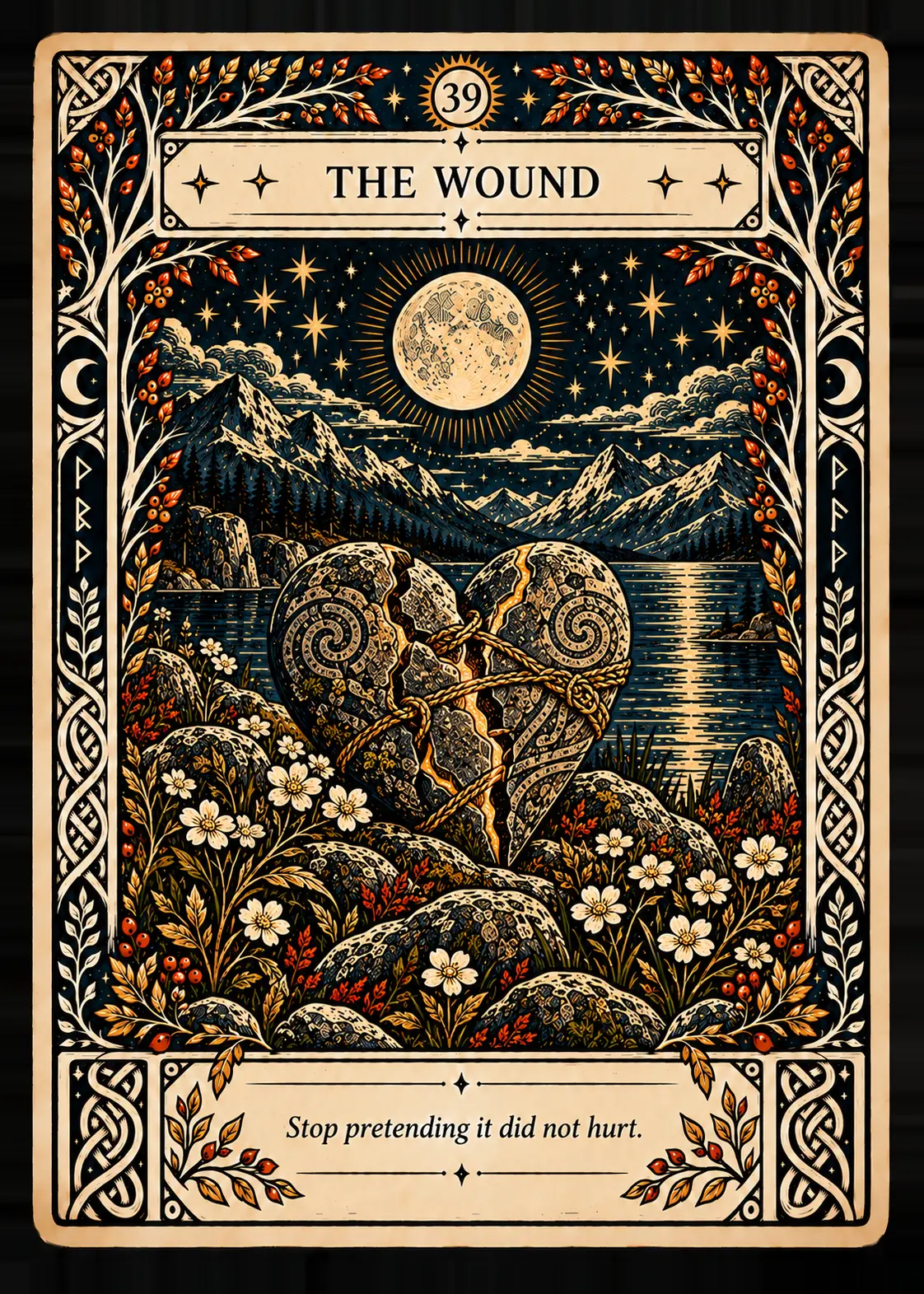
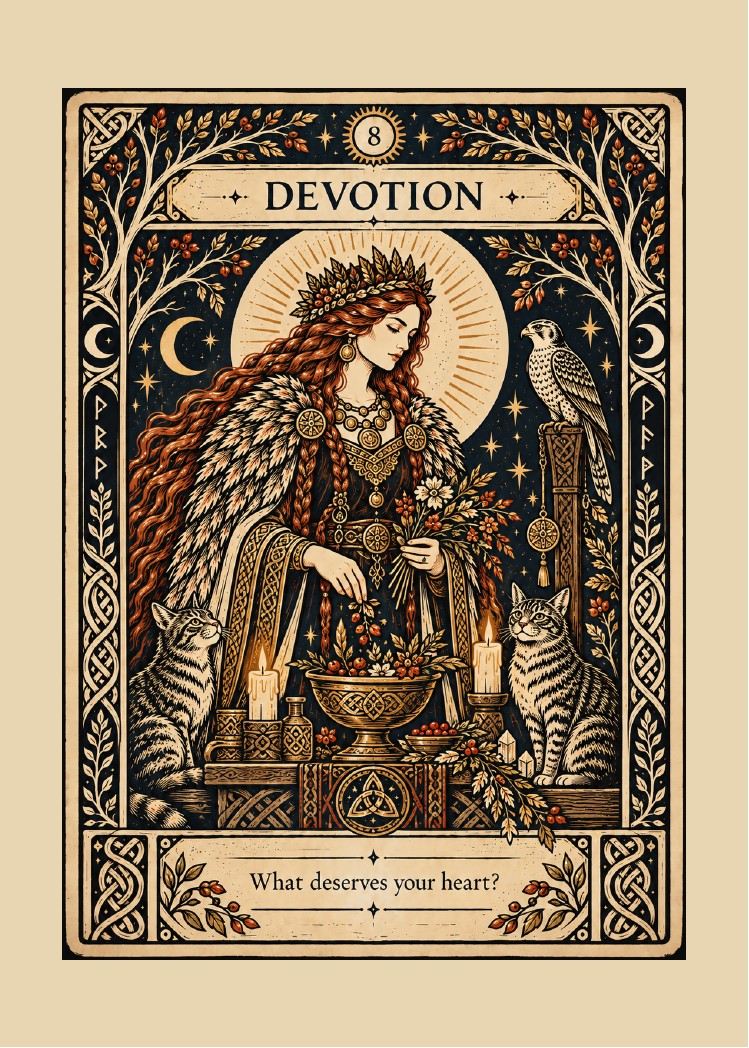
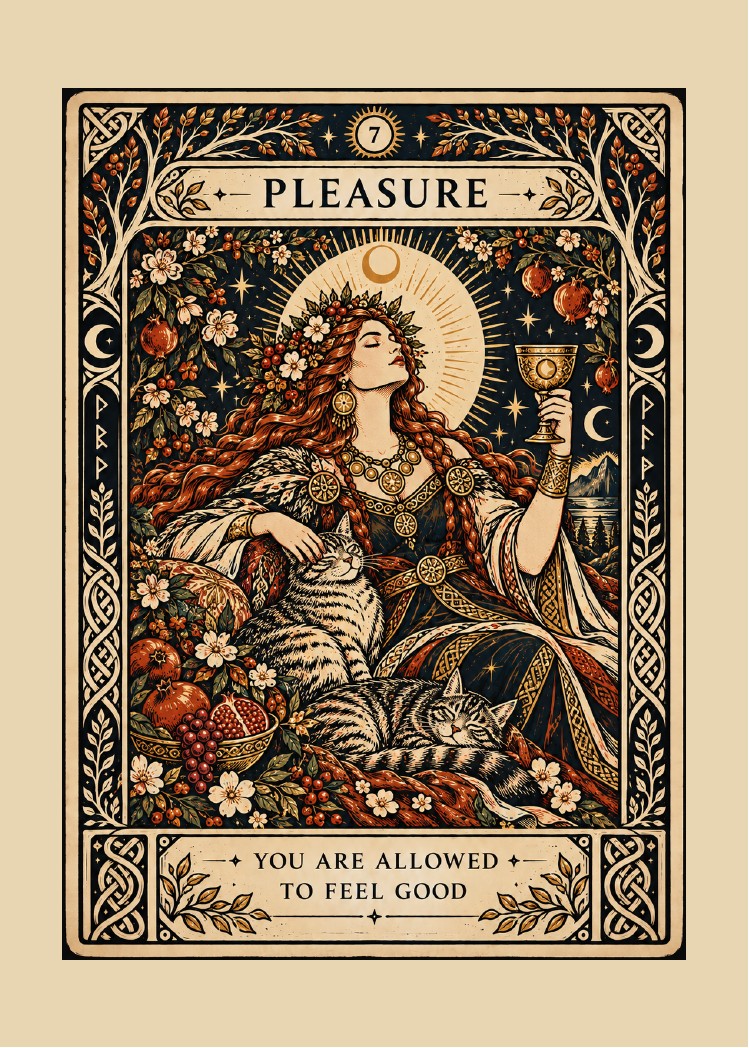
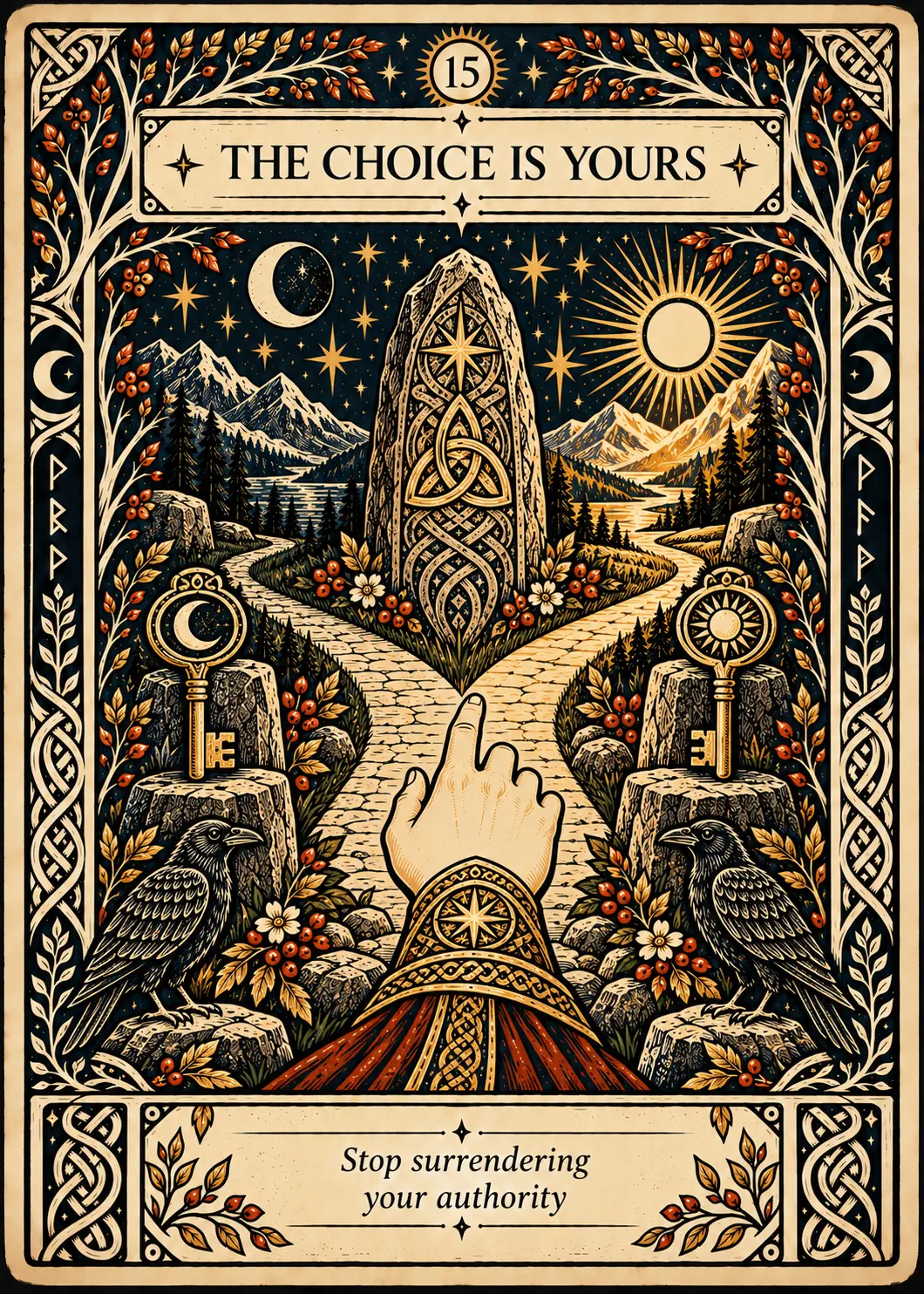
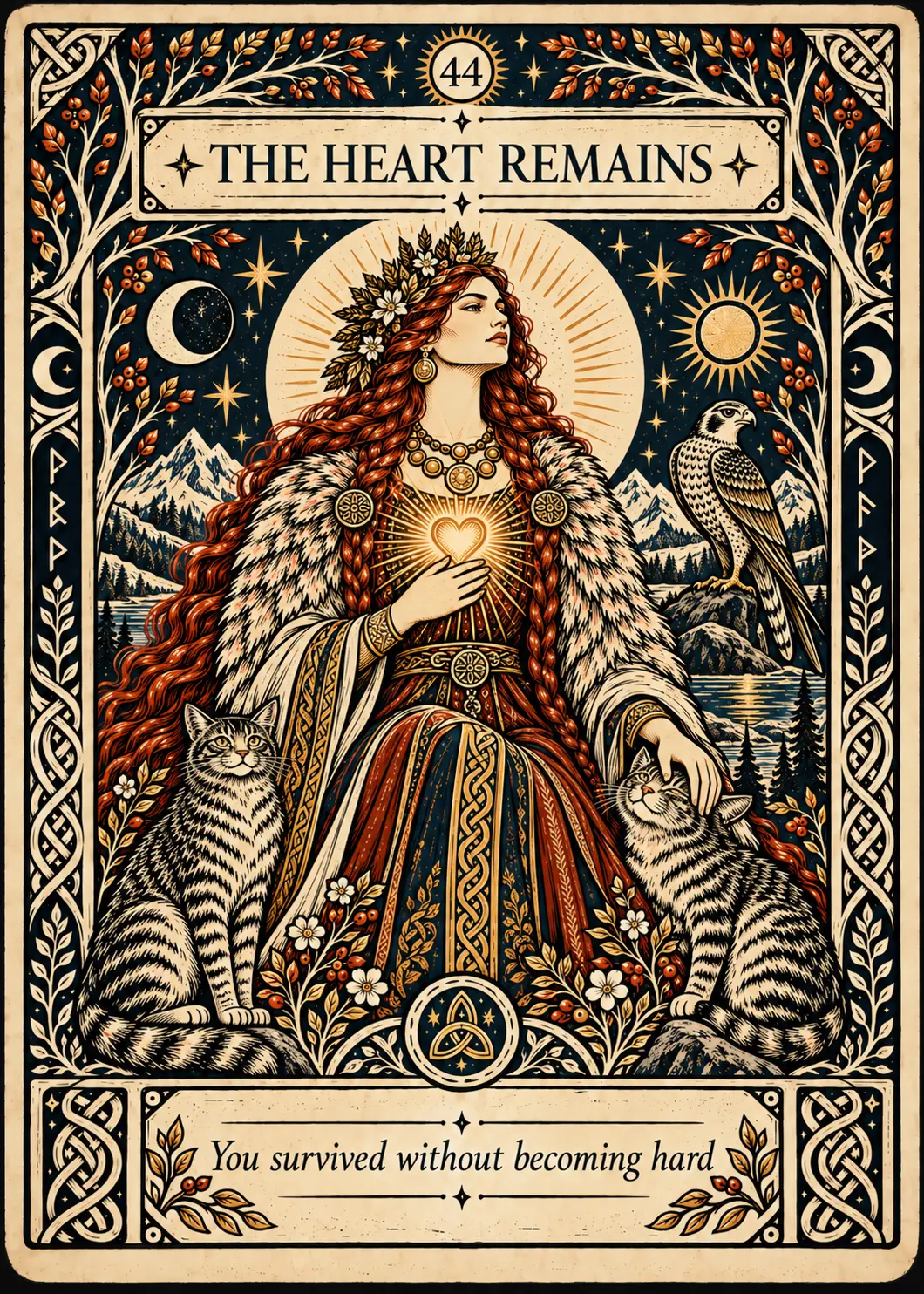
A cracked stone heart at the door: there has been a real hurt this year, and she has been pretending otherwise. What she brings is devotion — a faithful, giving heart. What she wants, and has not said, is pleasure: to feel good, to rest, to be at ease. What is hers to claim is her own authority: the keys and the choice at the fork in the road. And her seat is with Freya at the end of the deck: the heart that survived without becoming hard. The hall says: admit the hurt, keep your devotion for what deserves it, let yourself want joy, take back your choices — your heart is still whole.
Six Cards
Relationship
1 What am I bringing? · 2 What is the other person bringing? · 3 What exists between us now? · 4 What am I not seeing? · 5 What do I actually want? · 6 What is mine to do?
When to Use It
For any relationship: a partner, a lover, a parent, a child, a friend, a colleague. It is about the space between two people, not a verdict on either of them.
How to Lay It Out
Two columns facing each other. Card 1 on your side, card 2 on theirs. Card 3 between them. Card 4 beneath card 3. Card 5 below card 1, on your side. Card 6 at the foot, in the centre.
The Positions
1 · What am I bringing? — What you carry into this relationship: your gifts, your wounds, your habits.
2 · What is the other person bringing? — What they carry. Read this card with care; it is your view of them, not their hidden thoughts.
3 · What exists between us now? — The relationship itself, as it stands today.
4 · What am I not seeing? — What is hidden in the relationship, often about yourself.
5 · What do I actually want? — Your desire, plainly. This is Freya's position in the spread: say what you want without apology.
6 · What is mine to do? — Your move. Only yours. The other person's choices are not in this card.
How to Read It
Read each card's Relationship line from its In a Reading section. Then look across the table: do cards 1 and 2 mirror each other, or pull apart? Does card 5 agree with card 6, or are you wanting one thing and planning to do another?
Never use position 2 to tell another person what someone else thinks or intends. Offer it as "this may be what they are bringing" and let the person you are reading for decide.
A Worked Example
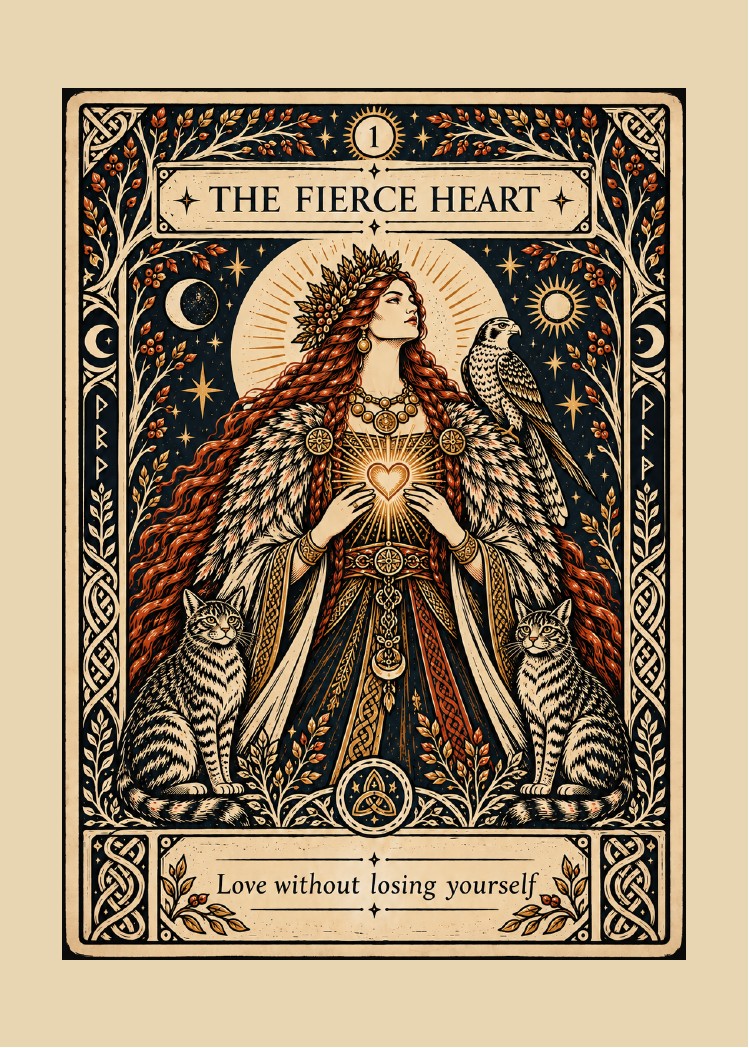
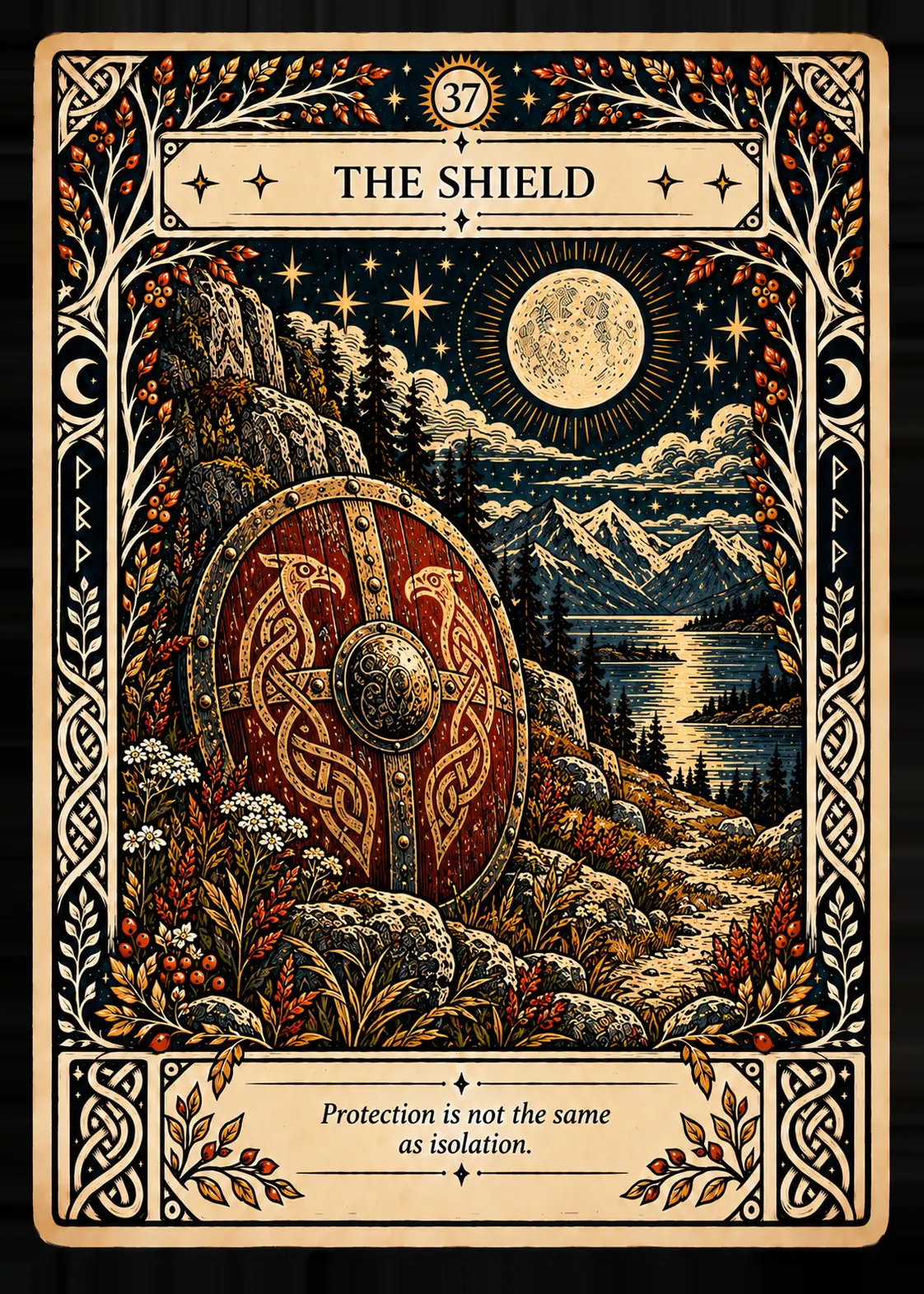
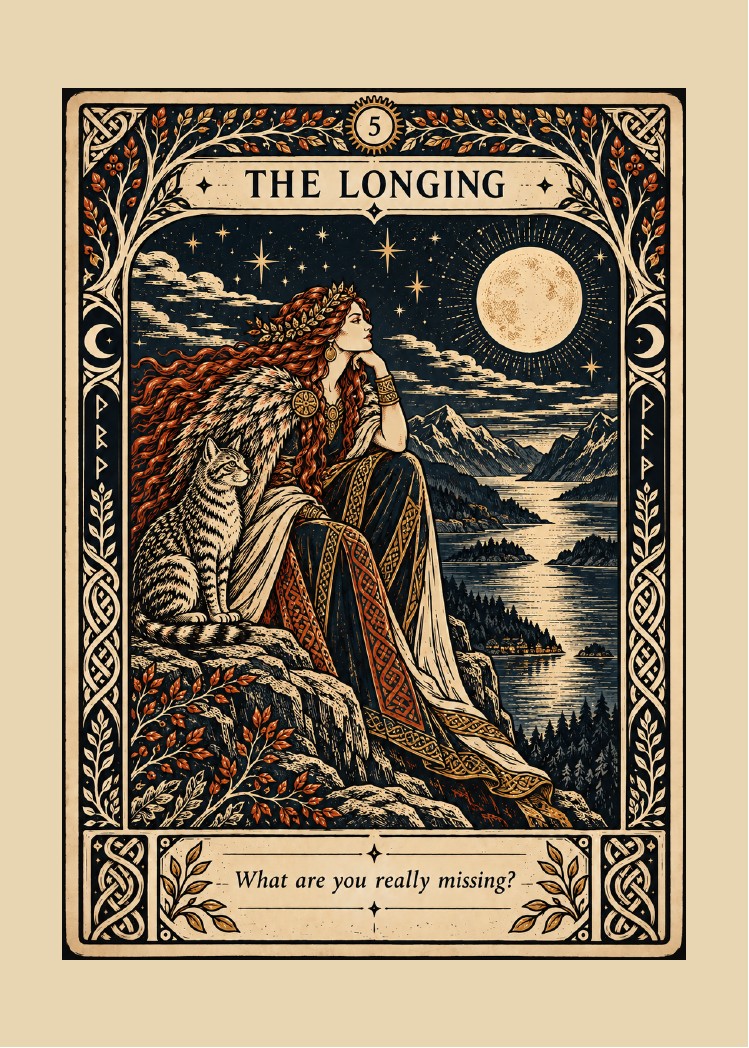
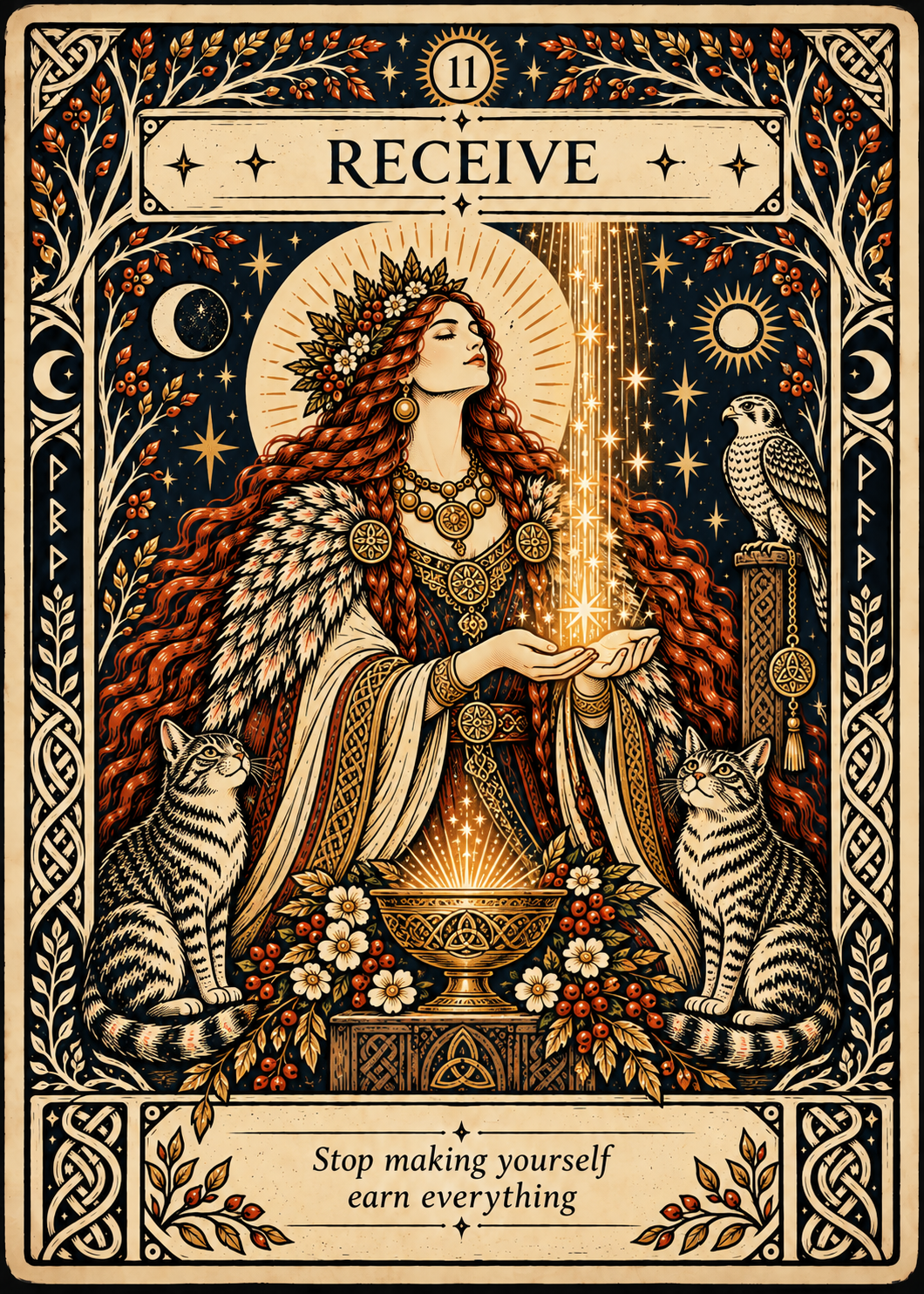
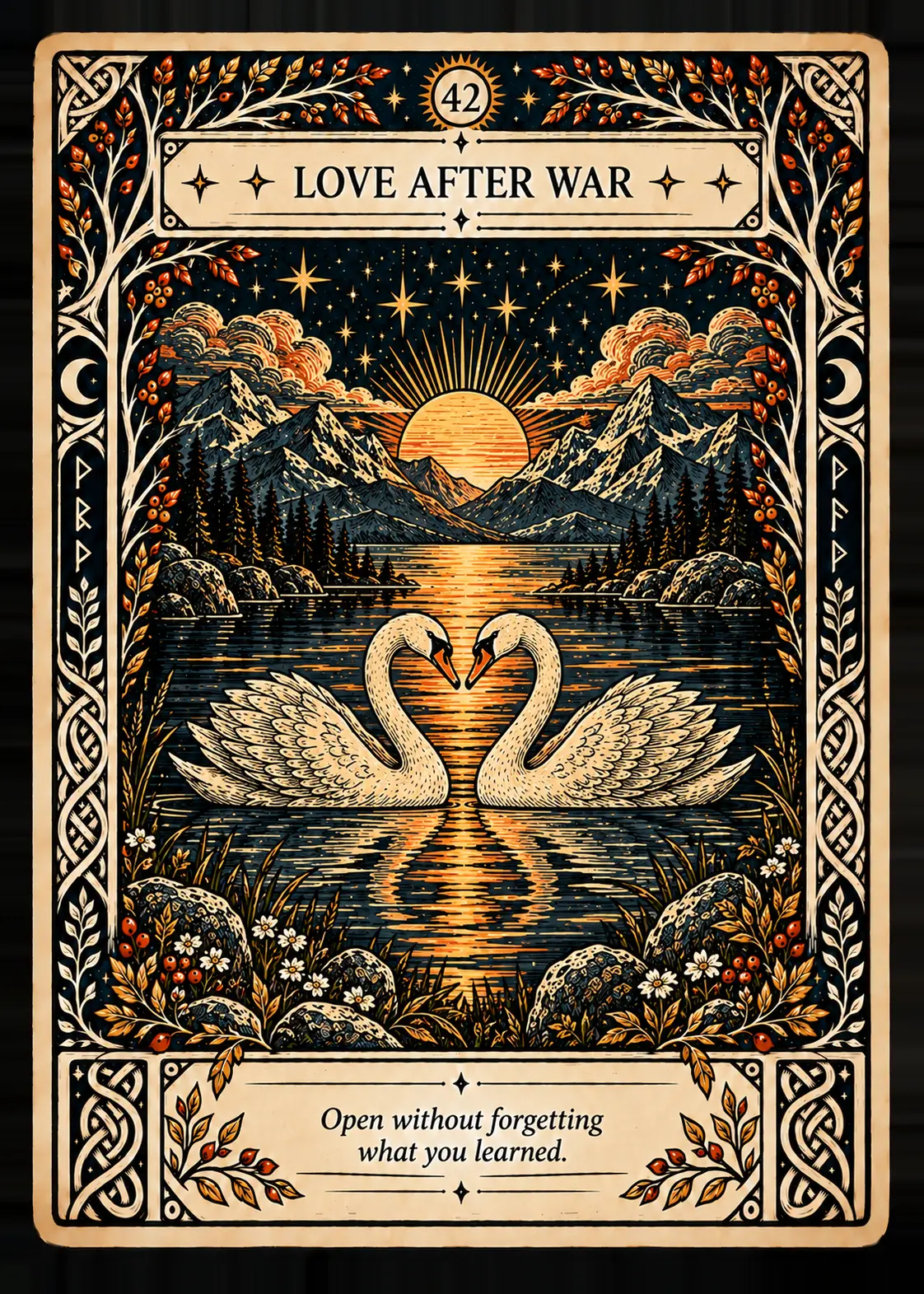
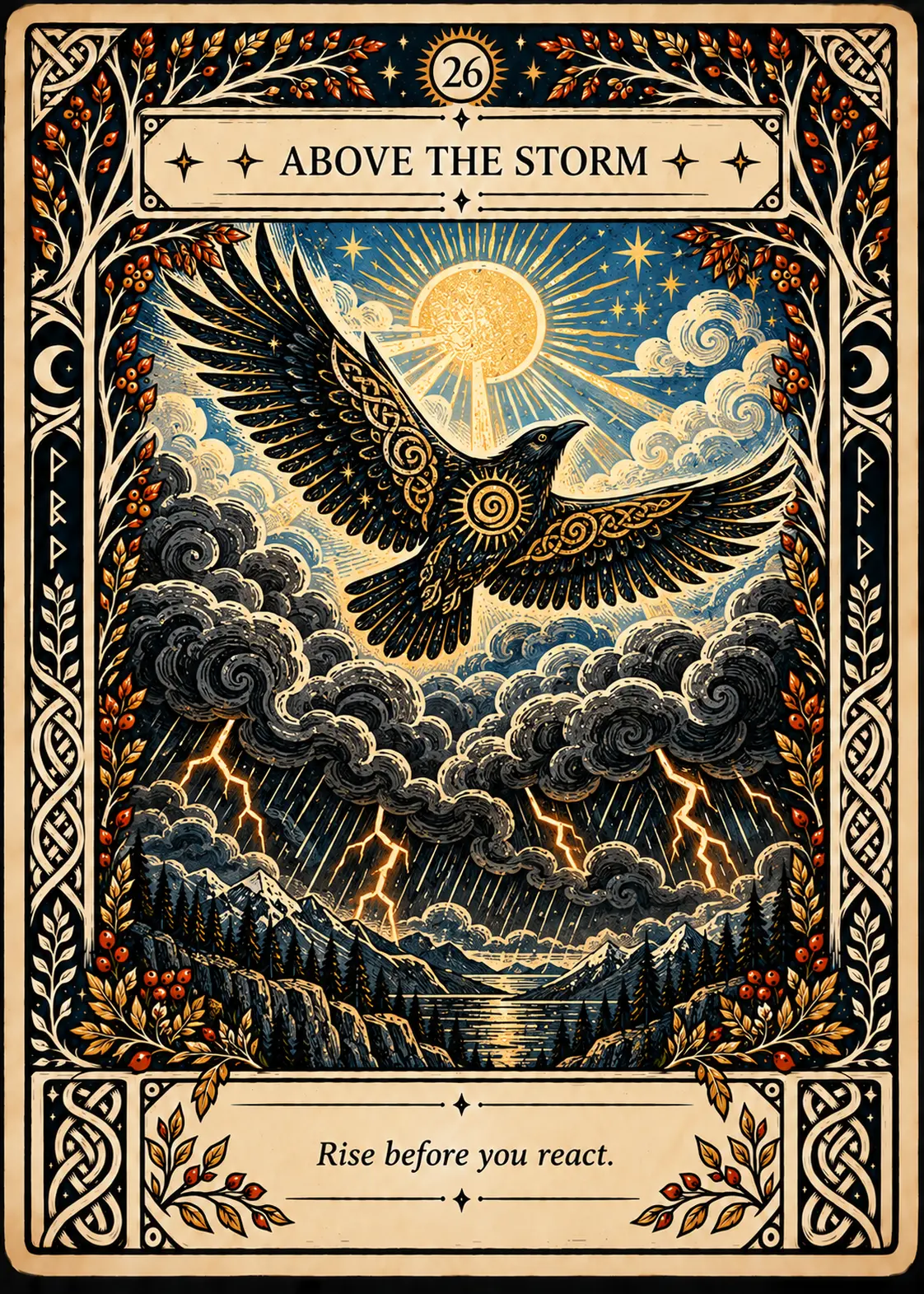
She brings a fierce, full love. He brings a shield: he is protecting himself, perhaps more than he needs to. Between them sits longing — something is missing on both sides. What she is not seeing is that she has been trying to earn his love rather than letting herself receive what he does give. What she wants is love after war: to open again, wisely, after a hard season. Her move is to rise above the storm: to respond from calm rather than from the hurt of the moment. The reading: stop earning, let in what is offered, and answer from above the clouds.
Six Cards
Work & Money
1 The real situation · 2 What I am giving · 3 What I am receiving · 4 What I have not asked for · 5 What I need to refuse · 6 What is mine to claim
When to Use It
For work, money, business, career, pricing, a job offer, a raise, a creative project that must pay its way.
How to Lay It Out
A row of three above a row of three. The top row is the exchange: 1, 2, 3. The bottom row is your move: 4, 5, 6.
The Positions
1 · The real situation — Not the story you tell about it. What is actually happening.
2 · What I am giving — Your time, skill, care and labour.
3 · What I am receiving — Money, recognition, learning, support. Compare it honestly with card 2.
4 · What I have not asked for — The fee, the help, the title, the time off you have not requested.
5 · What I need to refuse — The extra unpaid work, the bad deal, the role you are being pushed into.
6 · What is mine to claim — What is yours by right, and ready to be taken up.
How to Read It
Read each card's Work & Money line. Then compare cards 2 and 3: is the exchange fair? Cards 4, 5 and 6 together form one sentence: ask for this, refuse that, claim this.
A Worked Example
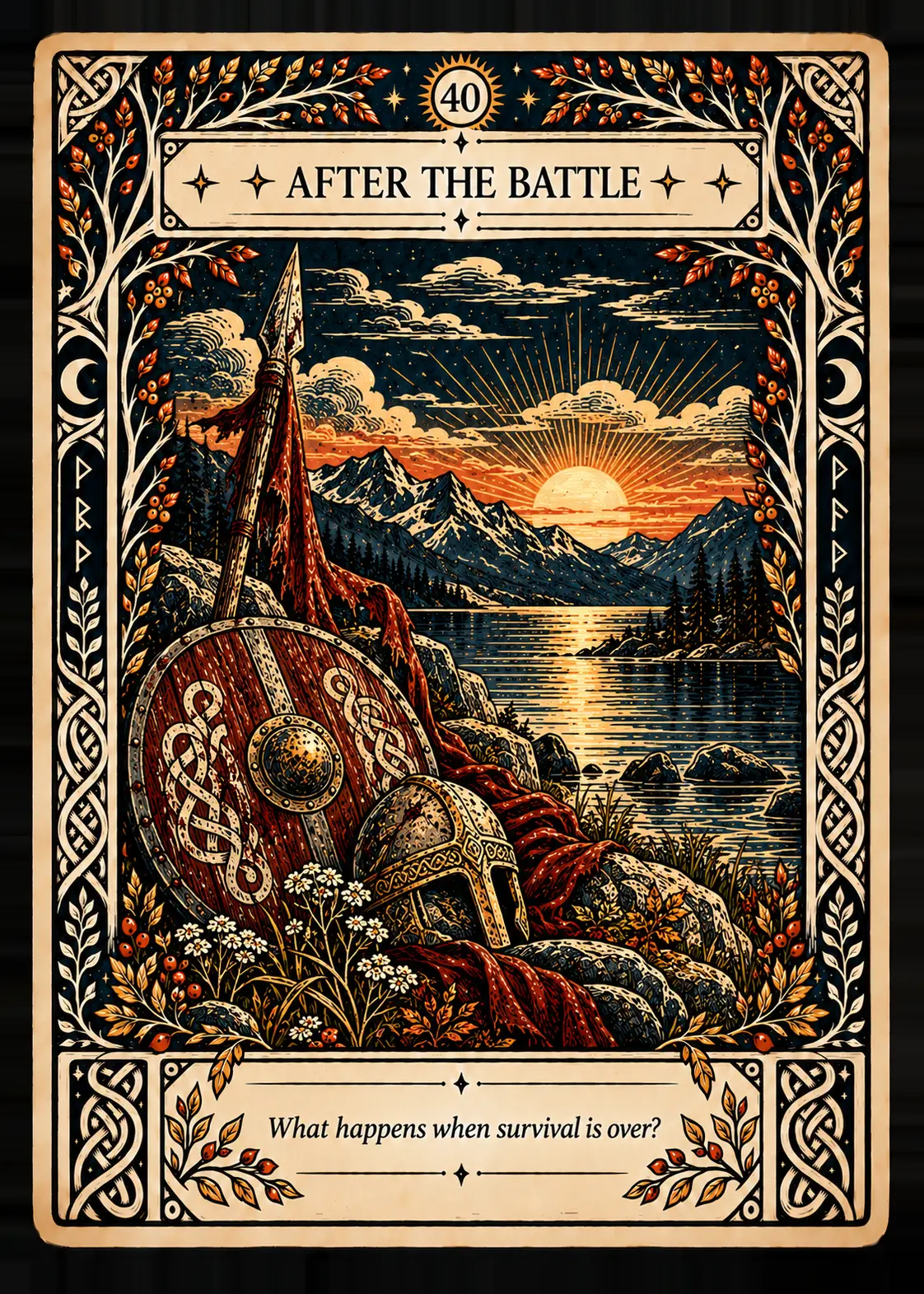
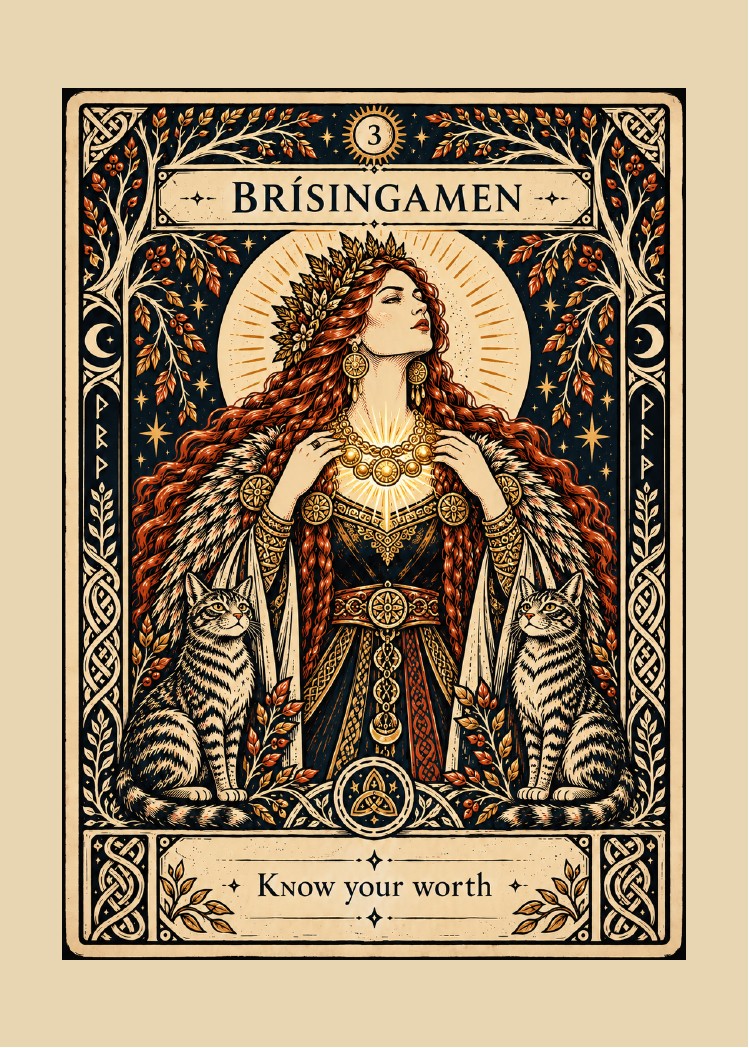
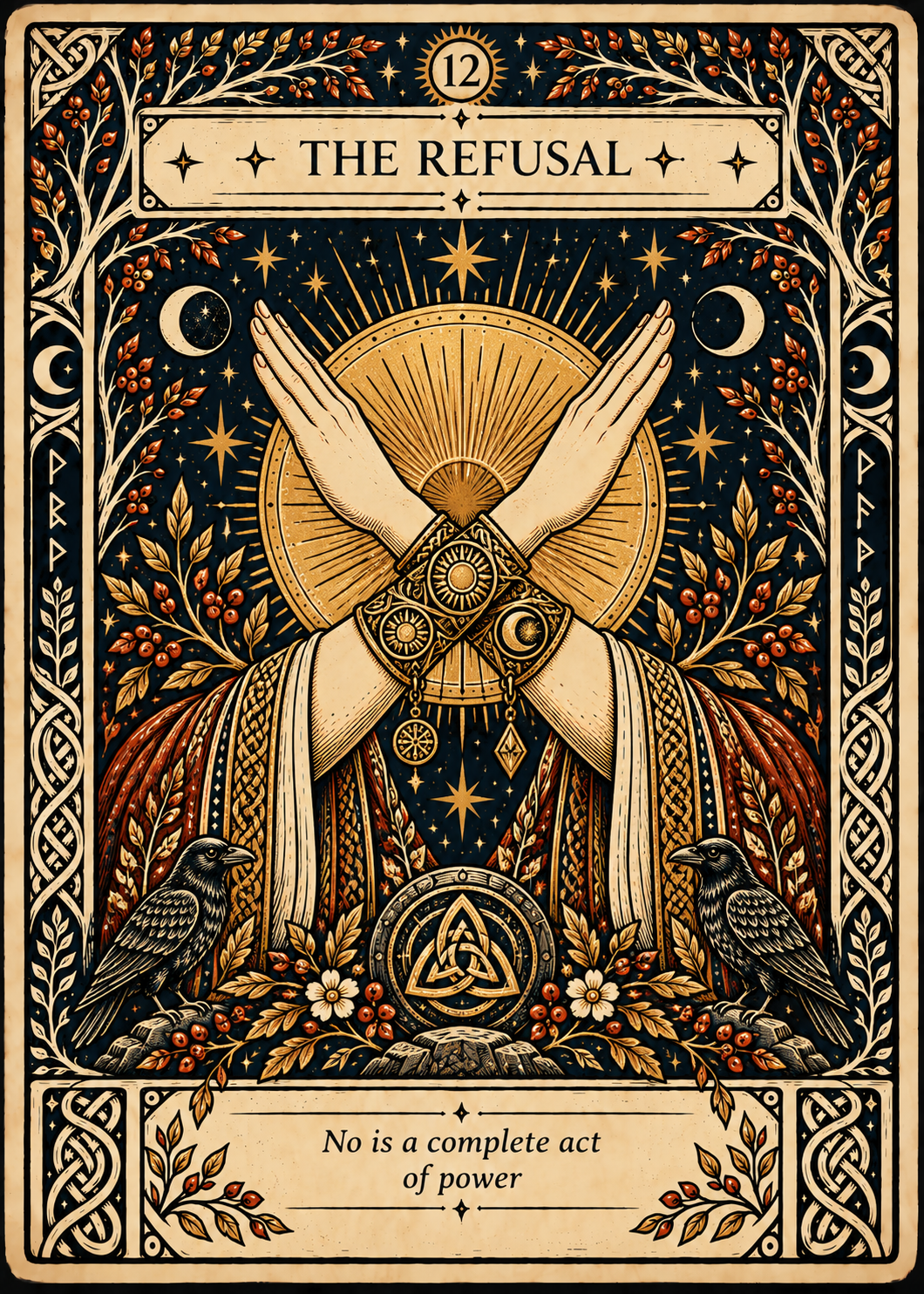
The crisis at work has passed, but she is still working as if it has not. She is giving to the point of depletion. What comes back is a cost, not a reward. What she has not asked for is the value she is worth. What she needs to refuse is the next request that would empty the jug again. What is hers to claim is her own authority over her time and work. The reading in one sentence: the battle is over — name your worth, say no, and run your work as your own.
Nine Cards
Eight Names
Mardöll · Hörn · Gefn · Sýr · Vanadís · Heiðr · Freyja · Valfreyja · and her at the centre
When to Use It
For a deep reading of your whole life, once a season or at a threshold. Give yourself an hour. It works best at the altar, on a Friday evening, with the flame lit.
How to Lay It Out
Freya took a name in every land she crossed. Lay eight cards in a circle around a ninth at the centre, starting at the top and moving sunwise (clockwise). This is the circle of the She Is series in small: Freya's names standing around you, and at the centre, what she wants for you.
The Positions
1 · Mardöll — what I love — She who makes the sea shine. Love, longing and grief. Who or what holds your heart.
2 · Hörn — the work of my hands — The flaxen one. Your daily work, your making, your keeping of a life.
3 · Gefn — what I give and receive — The giver. The balance of giving and receiving.
4 · Sýr — my body — The sow, sacred to the Vanir. Your body, appetite, pleasure and rest.
5 · Vanadís — the women before me — The dís of the Vanir. Your lineage, your inheritance, the women who stand behind you.
6 · Heiðr — what I know — The bright one, the seeress. Your seeing, your intuition, what you already know.
7 · Freyja — what is mine — The Lady. Your sovereignty: your authority, your desire, what you will not give away.
8 · Valfreyja — what I must stand for — Lady of the slain. Your courage: what is worth choosing and defending.
9 · Centre — What does she want for me? — Freya's own word to you.
How to Read It
Read each position, then look for cards that belong naturally to their position — a Heart card in Mardöll's place, a Seeress card in Heiðr's, a Field card in Valfreyja's. Those parts of your life are strong now. Look also for the cards most out of place; that is often where you are most starved. Read the centre card last, slowly. If Freya appears in the centre card, read its Freya Asks aloud and sit in silence before you write anything.
A Worked Example of the Centre
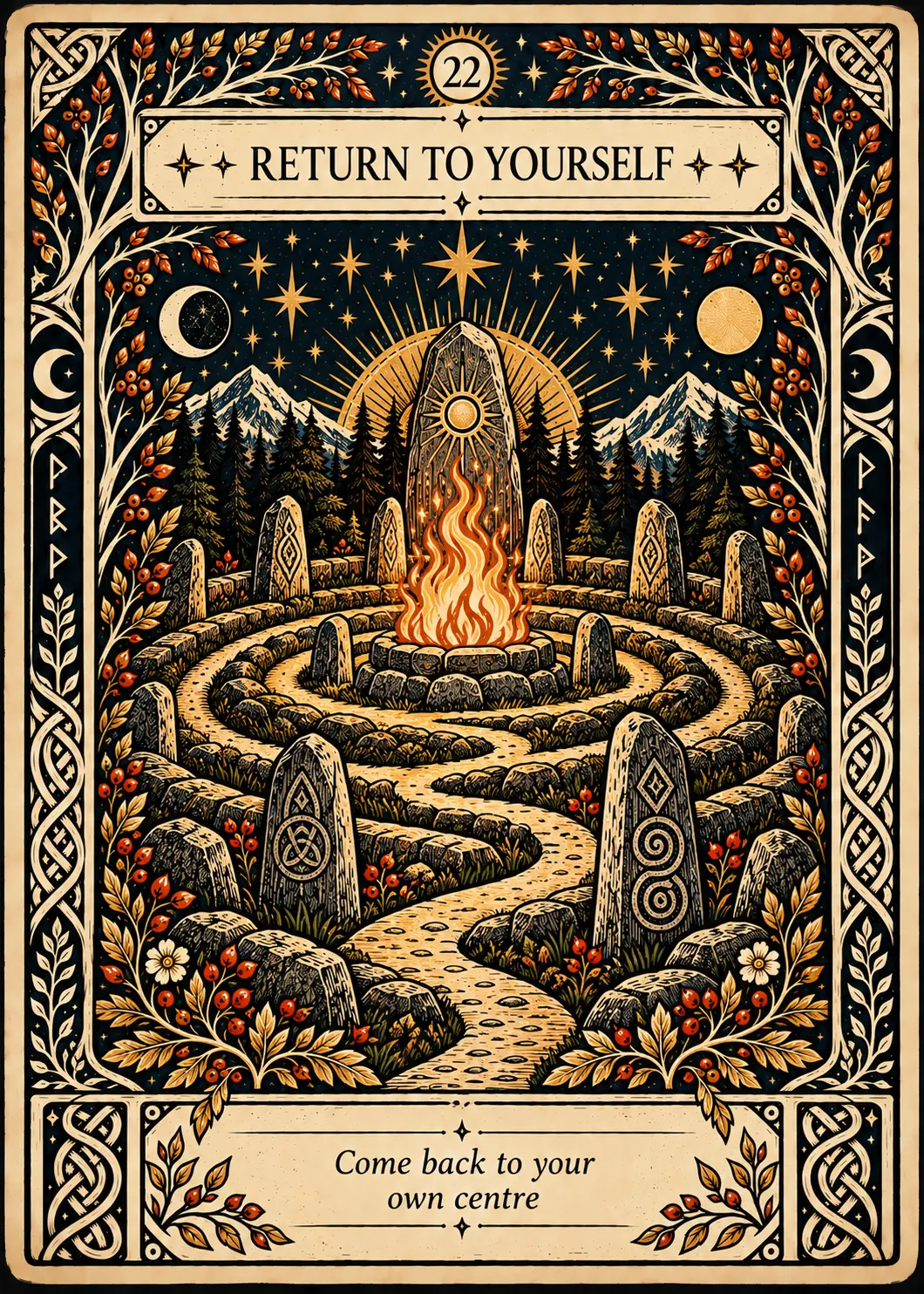
Whatever the eight cards have shown, Freya's word at the centre is a labyrinth with a fire burning in its heart. She wants you to come home: to walk the winding path inward and rest at your own fire before you go back out into your life.
Closing Every Reading
What is the one thing I understand now that I did not understand before this reading?
Write the answer in one sentence. Let that be enough. Not every insight needs action. Some cards ask for grief, some for refusal, some for pleasure, some for rest.
Before you put the cards away, thank her. Leave any food or drink on the altar overnight and return it to the earth in the morning. Put the cards back together with The Fierce Heart and The Heart Remains on top.
Reading for Someone Else
When reading for another person, help them look rather than telling them what their life means.
- Ask what they want clarity around. Help them make the question open.
- Lay the spread and describe every picture plainly before interpreting any of them. Very often they will begin to recognize themselves before you say anything.
- Ask what they see. People are far more willing to say a hard thing about themselves than to be told it.
- Offer each meaning as a question, using the card's Freya Asks: "This card asks: where do I act as though I belong to someone else? Does that connect?"
- Stop talking before you want to. The meaning lines are printed on the cards; they can read them again in their own time.
Avoid absolute claims about illness, death, pregnancy, betrayal, financial ruin, or another person's hidden thoughts. Freya's cards speak often of desire, refusal and battle; let the person you read for decide what those words mean in their own life.
Draw her cards
Freya's sanctuary holds her full deck and her readings.